
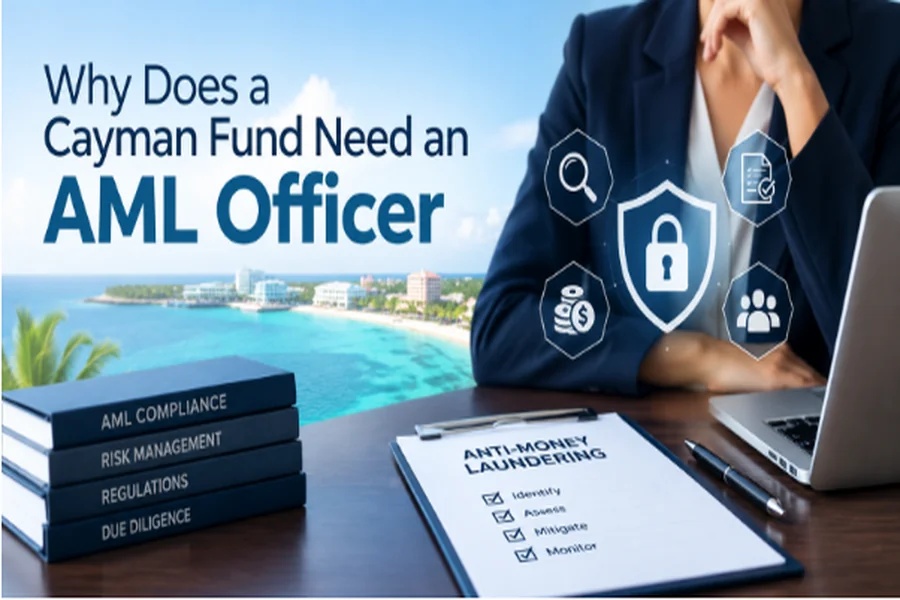
The Cayman Islands is a leading international financial centre, known for its sophisticated investment fund industry and well-developed regulatory framework. With investors, managers, service providers, and financial institutions operating across multiple jurisdictions, maintaining strong controls against financial crime is an important part of fund administration and governance.
An Anti-Money Laundering (AML) Officer plays a key role in helping an investment fund meet its AML and counter-terrorist financing obligations. The role goes beyond checking documents when investors subscribe to a fund. It involves establishing appropriate procedures, monitoring compliance, identifying potential risks, and ensuring that concerns are addressed appropriately.
What Does an AML Officer Do?
An AML Officer is responsible for overseeing the fund’s AML compliance framework. Their responsibilities can vary depending on the structure and activities of the fund, but typically include helping establish and maintain policies and procedures designed to identify and manage money laundering and terrorist financing risks.
The officer may also oversee processes relating to customer due diligence, ongoing monitoring, record keeping, and reporting. Where unusual or potentially suspicious activity is identified, the AML Officer can help determine whether further investigation or reporting is required.
Having a designated professional responsible for these areas provides greater accountability and helps ensure AML obligations are not overlooked.
Why Is AML Compliance Important for Cayman Funds?
A Cayman investment fund may have investors and counterparties located in several different countries. This international structure can create a variety of risks that need to be assessed and managed.
AML controls help funds understand who their investors are, where funds originate, and whether particular relationships or transactions present increased risks. Effective procedures can also help identify circumstances that require enhanced due diligence.
Strong AML practices are important not only for regulatory compliance but also for protecting the reputation and integrity of the fund. Weak controls can expose a fund and its service providers to regulatory, financial, and reputational risks.
Understanding the AML Officer’s Responsibilities
The AML Officer’s responsibilities generally involve several important areas of compliance.
Customer Due Diligence
Before accepting investors, appropriate due diligence should be completed to verify their identity and assess relevant risks. This may involve reviewing identification documents, ownership structures, source of funds, and other information depending on the circumstances.
Ongoing Monitoring
AML compliance does not end when an investor has been onboarded. Investor information and activity may need to be monitored throughout the relationship. Changes in ownership, unusual transactions, or other risk indicators may require additional review.
Risk Assessment
Different investors and relationships can present different levels of risk. An AML Officer helps ensure that appropriate risk-based procedures are applied rather than treating every relationship in exactly the same way.
Suspicious Activity Reporting
Where activity raises concerns, the AML Officer has an important role in assessing the circumstances and following applicable reporting procedures. This can include escalating matters internally and making appropriate reports to the relevant authorities when required.
Policies and Training
AML procedures should be documented, maintained, and updated when necessary. Staff and relevant service providers may also need appropriate guidance or training so they understand their responsibilities within the compliance framework.
The Importance of an Independent Compliance Function
An effective AML function provides an additional layer of oversight within a fund structure. While administrators, directors, investment managers, and other service providers may have their own responsibilities, the AML Officer provides focused oversight of AML compliance.
Independence is particularly valuable when potential issues need to be reviewed objectively. A well-structured compliance function can help identify weaknesses early and recommend improvements before they become more significant problems.
Choosing the Right AML Support
The complexity of a fund’s AML requirements can depend on its structure, investor base, activities, and risk profile. For this reason, AML responsibilities should be assigned to appropriately qualified professionals who understand the Cayman regulatory environment.
Professional anti money laundering officers in Cayman can provide specialised oversight and help funds maintain processes that are proportionate to their specific risks and obligations.
A Strong AML Framework Supports Long-Term Confidence
AML compliance is an essential component of responsible fund operations in the Cayman Islands. A dedicated AML Officer helps provide oversight of due diligence, monitoring, risk assessment, reporting, policies, and ongoing compliance.
For fund managers and directors, having an effective AML framework can provide greater confidence that financial crime risks are being appropriately managed. More importantly, it supports the continued integrity and reputation of the Cayman Islands as a trusted international financial centre.
As regulations and financial crime risks continue to evolve, maintaining an effective AML function should be viewed as an ongoing responsibility rather than a one-time compliance exercise.